A Baker's Guide to the Saint Paul Farmers' Market
One of the oldest farmers' markets in the country, where every loaf, jar, and bunch of carrots is made or grown by the person selling it. Here's what to know — whether you're shopping or thinking of selling.
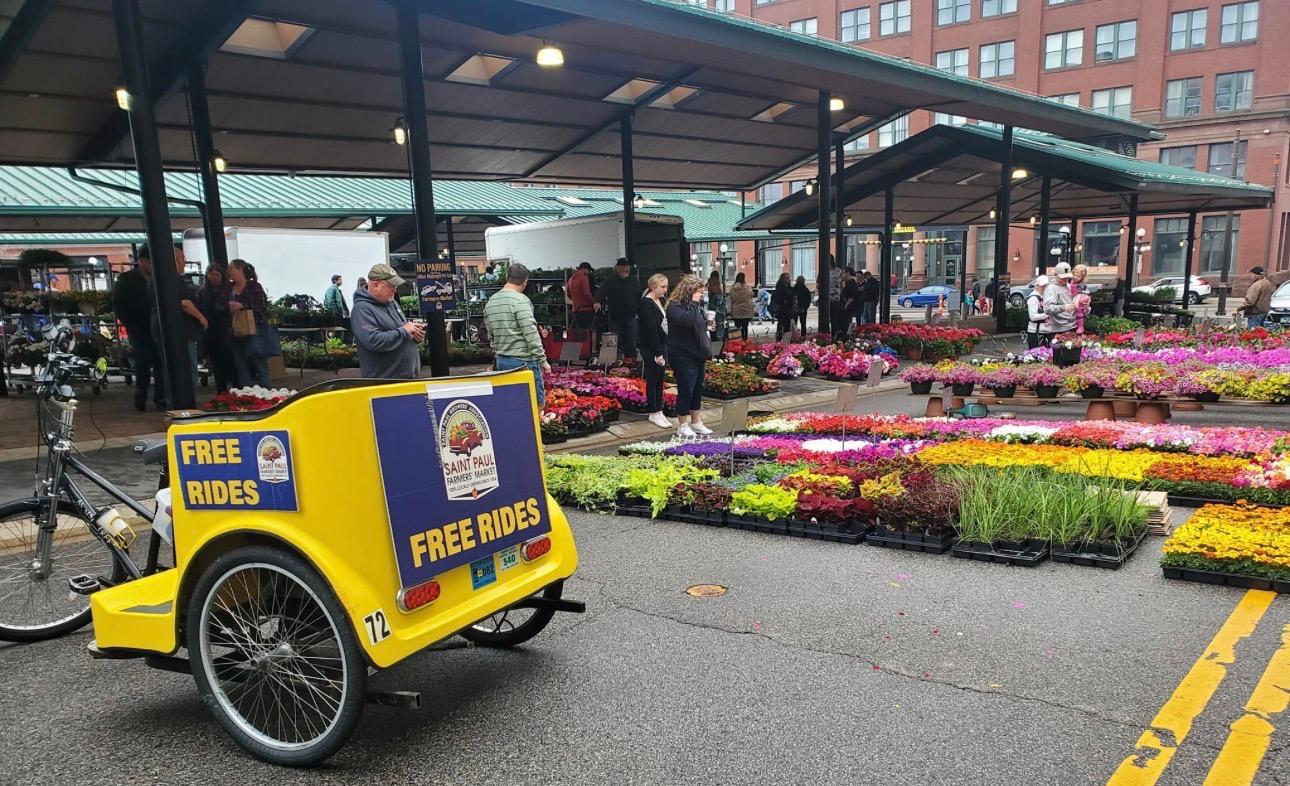
The Saint Paul Farmers' Market has been part of downtown longer than almost anything else in it. Growers have been setting up in the city since 1854, which makes it one of the oldest continuously running farmers' markets in the country. But the thing that makes it worth a Saturday morning isn't its age — it's a single rule that shapes everything on the tables.
Everything is made by the person selling it
Saint Paul runs a strict producer-only market: every item is grown or made by the vendor selling it, and it all comes from within roughly 100 miles of the Twin Cities. No resellers, no distributors, no produce trucked in from three states away and marked up. The person handing you a loaf is the person who baked it.
For a shopper, that's a guarantee — you're buying straight from the maker, and you can ask the one person who actually knows. For a baker, it's the whole appeal: your bread is judged on craft, next to other people who care as much as you do, not against a factory price tag.
When and where
The heart of it is the downtown Lowertown market, with an outdoor space at 290 Fifth Street East and an indoor hall nearby at 308 Prince Street East. In 2026 the downtown market runs:
Saturdays, 7 a.m. – 1 p.m.
Sundays, 8 a.m. – 1 p.m.
The main season opens the last Saturday in April and runs into the fall, with a smaller winter market carrying on afterward. Hours shift a little by season, so it's worth a glance at the market's website before you go. And Lowertown is only the flagship — the Saint Paul Growers' Association runs more than 20 neighborhood markets across the metro through the week, so there's a good chance one lands near you.
What's on the tables
It's a full spread: seasonal produce, of course, but also fresh breads and baked goods, honey and maple syrup, cheeses and eggs, meats, cut flowers, chocolate, sauces, and hot food to eat on the spot. Come hungry, and bring a bigger bag than you think you need.
Thinking of selling there?
Producer-only markets are made for home bakers — they exist precisely to put makers in front of their neighbors. In Minnesota you can sell breads, jams, and other shelf-stable foods as a registered cottage food producer, which is exactly the kind of vendor these markets are built around.
The one limit worth planning around: a market is a few hours, a day or two a week. That's where an online storefront earns its keep — the market brings the foot traffic and the face-to-face, and a service like Ovendrop covers the neighbors who couldn't make it Saturday, with local pickup the rest of the week. The stall and the storefront do different jobs; together they're a business.
Whether you're going to shop or thinking of setting up a table, the Saint Paul Farmers' Market is the local food scene at its most direct — a century and a half in, still just makers and their neighbors.
Written by The Baker's Table for The Baker's Table.